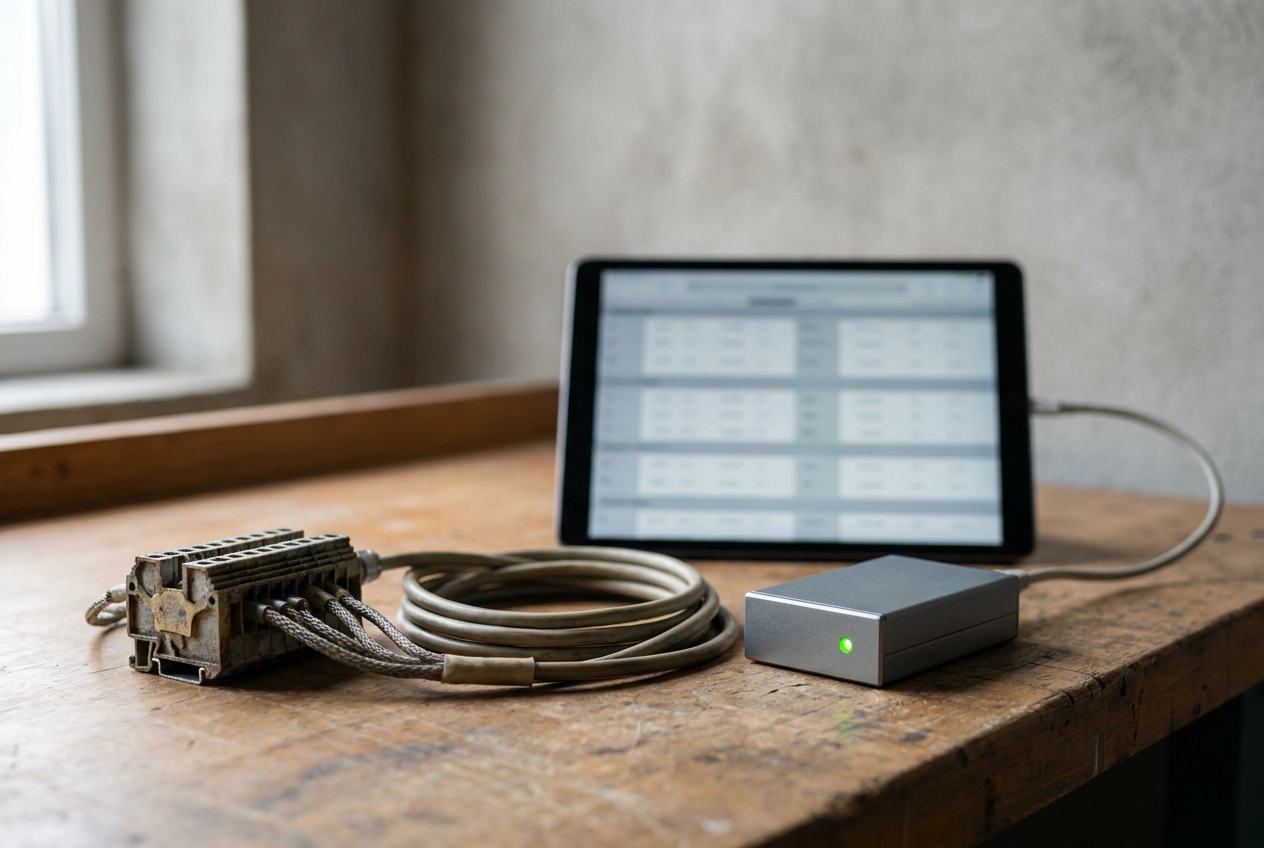
Millions of PLCs, sensors, and field devices running on Modbus protocols are still doing exactly what they were installed to do, reliably and without complaint. The problem is not the equipment. The problem is that the data locked inside it never reaches the dashboards, alarm systems, and analytics platforms that modern operations teams depend on.
This is where a Modbus gateway becomes one of the most strategically valuable tools in an OT modernisation project. Rather than triggering an expensive and disruptive rip-and-replace cycle, a gateway bridges your existing Modbus infrastructure directly to cloud IoT platforms, preserving capital investments while unlocking real-time visibility.
In this guide, you will work through the full picture: why replacement is rarely the right starting point, how Modbus gateways translate legacy protocols into cloud-compatible formats, and what the end-to-end architecture looks like from field device to live dashboard. You will also find practical guidance on platform selection, network security, phased deployment, and building a credible business case. By the end, you will have a clear framework for connecting legacy OT equipment to modern monitoring without interrupting a single hour of production.
Why Replacing Legacy OT Equipment Is the Wrong Starting Point
When the conversation turns to OT modernization, the instinct to replace aging equipment is understandable but almost always the wrong move. The visible cost of a rip-and-replace project is the new hardware. The real cost is everything else: production downtime during switchover, retraining technicians on new systems, re-certification of processes that regulators or quality standards require, and the months of parallel operation needed before anyone trusts the new setup fully. These line items rarely appear in the initial budget estimate, and collectively they routinely dwarf the hardware spend.
The equipment itself is not the problem. The global Modbus Communication Module market was valued at $2.8 billion in 2025 and is projected to reach $5.4 billion by 2034. The market growth trajectory signals that preservation-plus-connectivity, not replacement, is where industrial investment is concentrating. Across manufacturing floors, water treatment facilities, energy distribution networks, and building management systems, Modbus-based PLCs and sensors continue to operate reliably every day. The protocol is not failing. It is simply silent at the data layer.
That distinction matters. Your field devices are already generating valuable process data: temperatures, pressures, flow rates, energy consumption, equipment status. The modernization gap is not in the hardware generating that data; it is in the fact that the data never reaches an analytics platform, a dashboard, or an alarm system. The sensors are doing their job. The information they produce is just not going anywhere useful.
Layering IoT analytics on top of existing Modbus infrastructure closes that gap without touching what works. Rather than replacing a functioning PLC, you add a Modbus gateway that reads the same data the device is already producing and forwards it to a cloud platform. The operations managers who move fastest on modernization are the ones who reframe the question early. This is not an equipment decision. It is a connectivity decision. That reframe changes the risk profile entirely, reduces the budget conversation from capital expenditure to operational tooling, and protects the production continuity you are responsible for maintaining. Before evaluating any gateway hardware or platform, it is worth reviewing how to evaluate an IoT monitoring platform using a structured buyer’s checklist to understand what to look for before committing.
What Is a Modbus Gateway and What Does It Actually Do?
So, what exactly makes this connectivity decision possible? The answer is a relatively simple piece of hardware called a Modbus gateway.
A Modbus gateway is a physical device (or software component) that sits between your existing field equipment and a cloud platform. Its sole job is translation: it reads Modbus protocol messages from your PLCs, energy meters, and sensors, then converts that data into a format the cloud can actually work with, typically MQTT or REST. Nothing more complicated than that.
The Three Modbus Variants a Gateway Handles
Not all Modbus looks the same in the field, and a well-specified IoT Modbus gateway handles all three variants without requiring changes to your equipment:
- Modbus RTU is the most common legacy format. It runs over serial connections (RS-485 or RS-232) and is what you will find in the majority of older PLCs, energy meters, and process sensors. Modbus RTU transmits binary data, which makes it compact and efficient on serial lines.
- Modbus TCP runs over standard Ethernet on port 502 and is already IP-native, so it needs less translation work to reach the cloud.
- Modbus ASCII is a less common serial variant, used in some older control systems, where data is transmitted as human-readable ASCII characters rather than binary.
The gateway handles whichever variant your devices speak. Your equipment does not need to change.
Non-Invasive by Design
This is the point that tends to reassure operations managers most: the gateway changes nothing about how your existing equipment operates. It works by polling Modbus registers on a defined schedule, reading the data values your devices are already producing, then forwarding those readings upstream. It does not write to registers, issue control commands, or interact with your SCADA logic in any way. Your control environment continues running exactly as it always has.
The gateway also manages an important network boundary. It sits between your operational technology (OT) environment and the IT/cloud layer, handling outbound data forwarding without opening inbound paths into your control network. This boundary matters for security, and later sections cover it in more detail.
Think of it as a silent translator running in the background. Your PLCs keep doing their jobs. The gateway listens, converts, and forwards. And that same process data now appears in a cloud dashboard in real time, including data from connected devices like energy meters, where IoT platforms transform raw meter readings into automatic reports and threshold alarms.
The Full Architecture: From Field Device to Cloud Dashboard
With the gateway acting as your translator, it helps to see the complete data journey from start to finish.
Stage 1, Field device: Your PLC, energy meter, or sensor continues operating on its normal cycle, storing measurements in Modbus registers exactly as it always has. Nothing changes at the field level.
Stage 2, Gateway polling and local buffering: The Modbus RTU gateway polls those registers on a configured schedule, reads the raw values, and holds them in a local buffer. This buffering step is a critical reliability feature: if the cloud connection drops, the gateway queues all readings locally and forwards them in sequence once connectivity resumes. No measurements are lost during a network interruption.
Stage 3, Protocol translation and forwarding: The gateway converts the raw Modbus register values into a cloud-ready format and publishes them upstream. MQTT is the preferred transport protocol here. It is lightweight, uses a publish-subscribe model rather than constant polling, and handles unreliable or intermittent network conditions far better than HTTP REST. For industrial environments where cellular or site network quality is variable, that resilience matters.
Stage 4, Cloud ingestion and visualization: The IoT platform receives the data stream, stores it as time-series records, and makes it immediately available in dashboards, reports, and alarm systems. Once normalized data arrives at the platform, it is indistinguishable from data coming from any native IoT sensor, which is covered in more detail in the next section. Understanding what to prioritize when selecting an IoT platform becomes relevant at this stage, because the platform’s ingestion architecture directly determines how usable your Modbus data becomes.
Security by design: Security architecture for this outbound-only pattern is covered in detail in the deployment section below.
Aggregation across multiple devices: A single gateway can poll dozens of Modbus devices simultaneously, whether they are meters in an electrical room, sensors across a production floor, or instruments in separate buildings. That consolidation significantly reduces the number of managed connection points and simplifies ongoing maintenance.
Protocol Translation in Practice: Register Maps, Polling, and Data Normalization
Once the data is flowing through the gateway, the real configuration work begins. Understanding how Modbus stores and exposes data is what separates a reliable integration from one that produces confusing or inaccurate readings.
Register mapping is the foundation. Every Modbus field device organizes its measurements into numbered memory locations. Holding registers (read/write, 16-bit) and input registers (read-only, 16-bit) carry analog measurements like temperature, pressure, and flow. Coils hold single-bit on/off states for digital outputs. The gateway configuration tells the system which register addresses to read, how often, and what those raw values represent. Most device manufacturers publish register maps in their product documentation; if yours does not, a Modbus scanner tool can enumerate active registers quickly.
Polling interval requires deliberate tuning. Polling an older PLC too frequently on a shared RS-485 bus can affect its scan cycle and control performance. Polling too infrequently on a fast-changing pressure measurement means you miss the peaks that matter. As a general practitioner guideline, 1 to 15 seconds covers the majority of monitoring use cases, with critical safety or process measurements at the shorter end and stable environmental readings at the longer end.
Raw values need conversion before they are useful. Most Modbus devices transmit 16-bit integers rather than decimal values. A holding register reporting 1850 might represent 18.50 °C once a scaling factor of 0.01 is applied. Some devices also apply an offset. This scaling logic can live in the gateway configuration or in the IoT platform’s device template; either approach works as long as it is documented clearly. For a practical example, see this walkthrough of datalogger configuration for level measurement in wells, where the same scaling principles apply.
One additional consideration: sensors reporting 32-bit floating-point or signed values spread those values across two consecutive registers. The gateway must group those register pairs correctly, and the byte order (big-endian vs. little-endian) must match the device specification. An incorrect grouping produces values that look plausible but are completely wrong, which is one of the harder errors to catch during commissioning.
Once normalized, Modbus data is just data. After the gateway applies scaling, offset, and correct data-type handling, the resulting time-series values are structurally identical to readings from any native IoT sensor. That means every platform feature, including dashboards, threshold alarms, trend reports, and AI-based analytics, applies to your legacy Modbus devices without any special treatment or separate configuration path.
What to Look for in an IoT Monitoring Platform for Modbus Integration
Once your normalized Modbus data is flowing cleanly into a platform, the quality of that platform determines how much operational value you actually extract from it. Not all IoT monitoring platforms handle Modbus equally well, and choosing the wrong one creates problems that compound as your deployment grows.
Native Modbus support is the minimum entry requirement. The platform should have documented onboarding flows for common Modbus gateway hardware and should connect your devices without requiring custom middleware or bespoke integration scripts. Modbus TCP is formally codified under IEC 61158, so any platform claiming native support should be able to demonstrate it with a real device, not just reference it in marketing material. If a vendor cannot walk you through a live Modbus connection during evaluation, that is a meaningful warning sign.
Device visibility becomes critical the moment you scale beyond a pilot. A platform that only shows you live data values is not enough. You need a clear operational view: which gateways are online, when each device last reported, and whether any configuration drift has occurred. Without that layer, a silent gateway failure looks identical to a quiet process, and you will not discover the gap until it matters.
Alarm logic should require no coding. Operations managers need to set thresholds on any Modbus-sourced value, whether temperature, pressure, flow rate, or energy consumption, and configure notifications by SMS, email, or webhook without involving a developer. This is a market differentiator, not a compliance requirement, which means you have to verify it during evaluation rather than assume it.
Open APIs and hardware freedom protect your long-term investment. Modbus itself is an open, non-proprietary protocol, so lock-in at the field device layer is not the risk. The risk is a platform that traps your data behind proprietary exports or makes it difficult to integrate with existing SCADA or ERP systems. The platform should support standard REST APIs, structured data export, and hardware substitution without requiring a data migration. Platform selection decisions that seem minor today have significant consequences later, and evaluating how platform choices hold up over time is worth doing carefully before you commit.
Multi-protocol support is a practical necessity, not a premium feature. Many industrial facilities operate heterogeneous protocol environments, Modbus alongside LoRaWAN, MQTT-native devices, and OPC-UA equipment, making single-protocol platforms a poor fit. A single platform that ingests all protocol types gives you a unified operational picture and a single alarm system, which is what modernization is actually supposed to deliver.
Deployment Considerations: Network Security, Phased Rollout, and Operational Continuity
Choosing the right platform is only half the equation. How you deploy your Modbus gateway determines whether the project strengthens your operations or introduces new risk.
Protect the OT/IT boundary first. The gateway should use a strictly outbound communication pattern, pushing data to the cloud without accepting inbound connections, or it should sit in a demilitarized zone (DMZ) between your control network and the internet. Per NIST SP 800-82r3, network segmentation is a foundational defense for industrial control systems: if a gateway is ever compromised, proper segmentation prevents lateral movement into your Level 1 PLCs or distributed control systems. Cloud connectivity does not need an inbound path into your control network, and it should never have one.
Keep management traffic separate. Firmware updates and remote access to the gateway should travel through a dedicated management channel, isolated from the Modbus polling path. Using the same data path for both creates a potential vector into your field device network, and OT environments prioritize availability above all else. Mixing the two is an unnecessary risk with a straightforward fix.
Start small and validate before scaling. A phased rollout protects operational continuity and builds the internal confidence needed to expand. Connect one non-critical system first, confirm that register readings are accurate in the platform, then move to the next area. This approach means a misconfiguration affects one monitoring point, not an entire production line.
During commissioning, run the new gateway in parallel with your existing monitoring systems for a defined validation period, typically several weeks, to verify that readings match your current instrumentation, that alarm thresholds trigger correctly, and that gateway polling has no measurable effect on PLC cycle times or SCADA performance. Parallel operation is the only way to catch discrepancies before they matter operationally.
Document everything from day one. Your register map and gateway configuration are now part of your facility’s operational knowledge base. Undocumented configurations create handover problems, complicate audits, and slow down any future expansion. For practical guidance on building that documentation habit from the start, the implementation tips for successful datalogger projects cover exactly this kind of structured approach and are worth reviewing before commissioning begins.
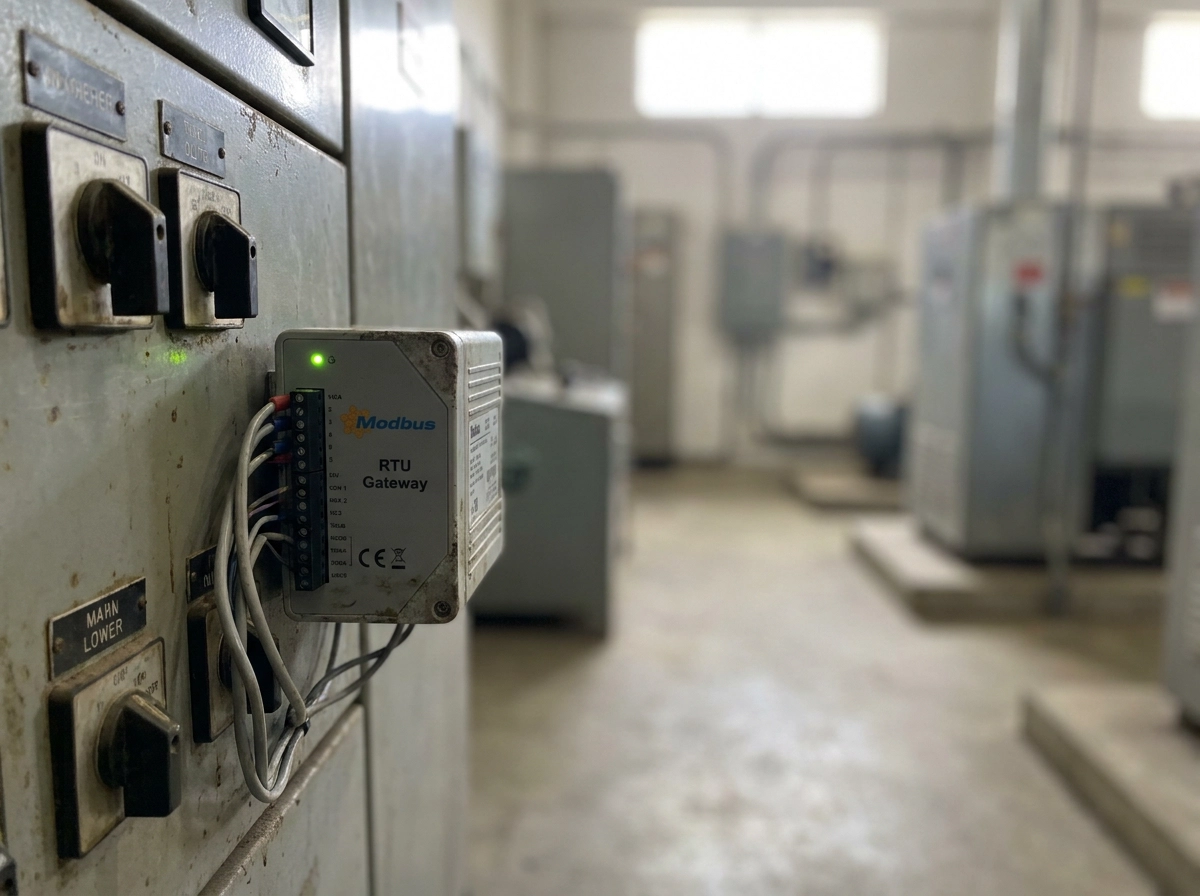
The Business Case: Gateway Implementation vs. Full Equipment Replacement
Once your deployment is validated and running cleanly, the natural next question is whether the gateway path was truly worth it compared to replacing the equipment outright. The numbers make a compelling argument.
A Modbus RTU gateway is substantially less expensive than equivalent new replacement hardware alone, and that gap widens further when indirect costs are included. In practice, those indirect costs often exceed the hardware cost itself, particularly in continuous-process environments where even a planned shutdown carries a measurable production loss.
The TCO advantage compounds the longer your equipment keeps running. Legacy Modbus infrastructure that is otherwise functioning correctly can realistically continue operating well beyond its nominal service life. Every year that equipment remains in service while still feeding IoT analytics into your dashboards is a year of capital expenditure deferred, without any reduction in the modernisation value you originally set out to capture. For a more detailed look at how IoT data communication and transfer work across different device types, this overview of IoT communication and data transfer covers the underlying principles clearly.
The risk profile is fundamentally different, and that matters. A gateway deployment that underperforms can be rolled back without touching production. A failed equipment replacement offers no equivalent exit. In regulated industries including pharmaceutical manufacturing, water treatment, and energy distribution, an incomplete or problematic replacement can carry safety, compliance, and operational continuity implications that are difficult and expensive to resolve.
Equally important: the IoT monitoring outcomes available through the gateway path are not a reduced version of what a replacement would deliver. Predictive maintenance signals, energy consumption visibility, remote monitoring, and faster alarm response are all fully accessible. The modernisation outcome is functionally identical; the cost and risk are not.
For organizations managing large Modbus-dependent installed bases across manufacturing lines, water infrastructure, energy distribution, or building management systems, this is not a compromise position. It is the strategically sound choice. The gateway path preserves asset value, accelerates the analytics roadmap, and keeps the operations teams who depend on that infrastructure protected throughout.
How Sensor-Online Handles Modbus-to-Cloud Integration
The business case points clearly toward bridging rather than replacing. Choosing the right platform to receive that bridge is where the decision becomes concrete.
Sensor-Online, developed by Nodeledge, is built from the ground up as a hardware-agnostic monitoring platform with native support for Modbus alongside LoRaWAN, OPC-UA, MQTT, SCADA, and open APIs. That means Modbus register data flows into exactly the same dashboards, alarm engines, and analytics tools as any wireless sensor or native IoT device on the platform. There is no separate Modbus module to manage and no second-class data path.
Hardware selection stays in your hands. Sensor-Online supports a broad catalog of over 1,200 connectivity tools, including dataloggers and gateway-compatible hardware suited to different field environments. You choose the Modbus RTU gateway that fits your site conditions, RS-485 bus length, and device count, then onboard it directly into Sensor-Online without custom middleware or integration development. The same straightforward onboarding process applies whether you are connecting an industrial PLC, an energy meter, or a wireless room sensor for indoor climate monitoring.
Alarm configuration is handled entirely through the dashboard interface. Operations teams can set threshold rules on any Modbus-sourced measurement, configure escalation paths, notification channels, and repeat-alert logic without involving a developer. If a value goes out of range, the right person is notified immediately.
No lock-in is a design principle, not a marketing claim. If your hardware needs change, or you want to add LoRaWAN sensors or OPC-UA devices alongside your existing Modbus infrastructure, the platform accommodates that expansion without a data migration or platform replacement. Your historical data stays in place and your dashboard configuration carries forward.
For organizations running Modbus infrastructure in buildings, energy systems, water networks, or industrial operations, Sensor-Online functions as the full-stack cloud layer sitting above your field environment. You keep complete control of your PLCs and field devices. Sensor-Online handles ingestion, storage, visualization, and alerting. The two layers operate independently, which is exactly the low-disruption model the gateway architecture is designed to enable.
Where to Go from Here
The architecture, platform selection, and business case are all covered. What remains is putting the first action on the table.
Start with a device inventory. Walk your facility and list every Modbus-connected device: its type (PLC, energy meter, temperature sensor, flow transmitter), its communication variant (RTU over RS-485, TCP over Ethernet, or ASCII serial), its register map if the documentation is available, and how frequently it needs to be polled. That list becomes the direct input to your gateway configuration. Without it, you are guessing; with it, the setup work is largely mechanical.
Pick one non-critical monitoring point as your pilot. A single energy meter or ambient temperature sensor is enough to validate the full chain: device to gateway, gateway to cloud, cloud to dashboard. That scope is achievable within a short, bounded timeframe, and it gives you something concrete to evaluate before committing to a wider rollout. A working proof of concept also builds internal confidence in a way that a vendor demo or a slide deck never quite does.
As noted in the platform evaluation section, ask for a live Modbus device demonstration during vendor evaluation.
The team at Sensor-Online is ready to help at any stage of this process. With hands-on experience connecting Modbus infrastructure across manufacturing, water, energy, and building environments, Sensor-Online is well positioned to help you move from legacy isolation to real-time visibility, without touching the infrastructure that is already doing its job.
Reach out at info@nodeledge.se or call +46(0)500 6000 22.
Conclusion
Connecting legacy Modbus equipment to modern IoT platforms does not require replacing hardware that is already performing reliably. The right gateway translates what your field devices already communicate into data your team can actually use. A phased approach reduces risk, protects operational continuity, and delivers measurable value before any large-scale commitment is made. And the business case consistently favors integration over replacement, in both cost and timeline.
The path forward is more accessible than most teams expect. Start with a single device, validate the full chain, and build from there.
Frequently Asked Questions
Why should we consider a Modbus gateway instead of replacing our legacy equipment?
Replacing legacy Modbus equipment is rarely the right choice because the real costs go far beyond new hardware. You'll face production downtime during switchover, technician retraining, process re-certification, and months of parallel operation before trusting new systems. A Modbus gateway preserves your capital investments by bridging existing infrastructure to cloud IoT platforms, delivering modernization benefits without the disruption, risk, or hidden costs of replacement. The global Modbus market growth to $5.4 billion by 2034 confirms that preservation-plus-connectivity is the industry's preferred strategy.
How does a Modbus gateway actually work without disrupting our current operations?
A Modbus gateway is a non-invasive translator that sits between your field devices and the cloud. It reads data from Modbus registers on a defined schedule (typically 1-15 seconds), converts that data into cloud-compatible formats like MQTT, and forwards it upstream—all without writing to registers, issuing control commands, or changing how your PLCs operate. The gateway manages an important security boundary, pushing data outbound only, which means your control environment continues running exactly as it always has while field data becomes visible in real-time dashboards.
What are the three types of Modbus protocols, and does a gateway handle all of them?
The three Modbus variants are: Modbus RTU (the most common legacy format running over RS-485 or RS-232 serial connections with binary data), Modbus TCP (IP-native, running over standard Ethernet on port 502), and Modbus ASCII (less common, transmitting human-readable ASCII characters over serial). A well-specified IoT Modbus gateway handles all three variants simultaneously without requiring changes to your equipment, so you don't need to upgrade devices or rewire your facility.
What key features should we look for when choosing an IoT monitoring platform for Modbus integration?
Look for: (1) Native Modbus support with documented onboarding for common gateway hardware, (2) Device visibility showing which gateways are online and when devices last reported, (3) Alarm logic configurable through dashboards without coding, (4) Open APIs protecting against vendor lock-in, and (5) Multi-protocol support to handle heterogeneous environments with Modbus alongside LoRaWAN, MQTT, and OPC-UA. These capabilities ensure your Modbus data receives equal treatment to native IoT sensors across all platform features.
How should we approach deploying a Modbus gateway to minimize risk and ensure success?
Start with a phased, low-risk approach: (1) Begin with one non-critical monitoring point to validate the entire chain from device to gateway to cloud dashboard, (2) Run the new gateway in parallel with existing systems for several weeks to verify reading accuracy and confirm no impact on PLC performance, (3) Document everything—register maps and configurations become part of your operational knowledge base, (4) Protect the OT/IT boundary using strictly outbound communication or a DMZ, and (5) Keep management traffic separate from polling paths. This structured approach builds internal confidence while protecting operational continuity.
