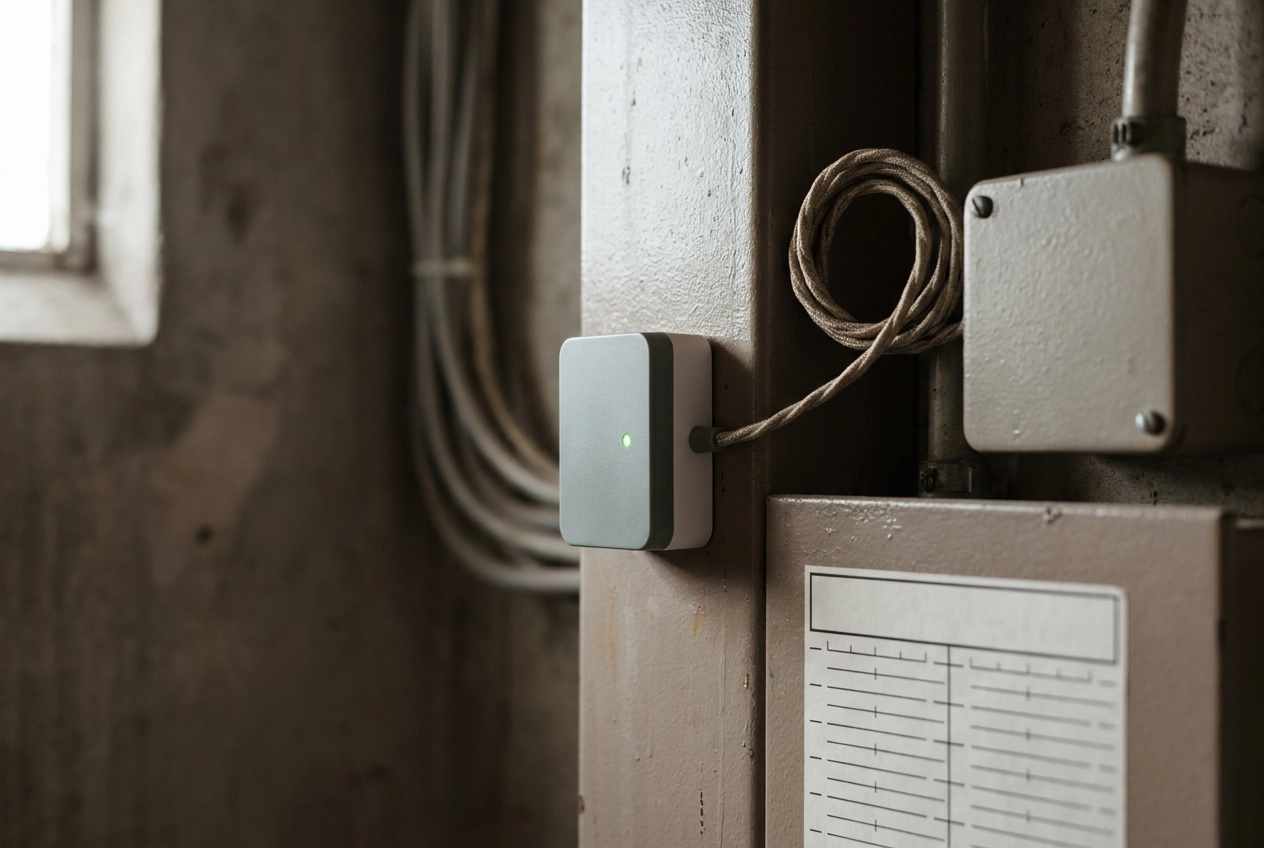
Every month, commercial property owners absorb utility costs that should rightfully belong to their tenants. Under conventional master-metering arrangements, building owners pay a single aggregate bill and recover those costs through fixed fees tied to square footage, a method that rewards energy-intensive tenants and penalizes efficient ones. The result is a structural revenue leak that compounds quietly across every billing cycle.
Energy sub metering changes that equation entirely, but not in the way most property owners initially assume. This is not an IT upgrade or a smart-building novelty. It is a revenue instrument, a compliance mechanism, and a lease enforcement tool that connects sensor data directly to contractual cost recovery.
In this guide, you will learn how a commercial sub-metering system is structured from the physical sensor layer to the invoicing platform, how IoT gateway architecture supports real-time consumption data, and how that data integrates with lease agreements and state-level benchmarking mandates. Whether you are evaluating your first deployment or optimizing an existing system, this post gives you the technical and legal framework needed to make sub-metering work as a business asset.
The Hidden Cost of Master Metering
In most commercial buildings, a single utility meter captures everything: the law firm on the third floor, the restaurant on the ground level, the data center tucked into the basement. The building owner receives one bill, pays it, and then recoups the cost from tenants through flat monthly charges or square-footage allocations baked into the lease. It is a familiar structure, and it is fundamentally broken as a pricing mechanism.
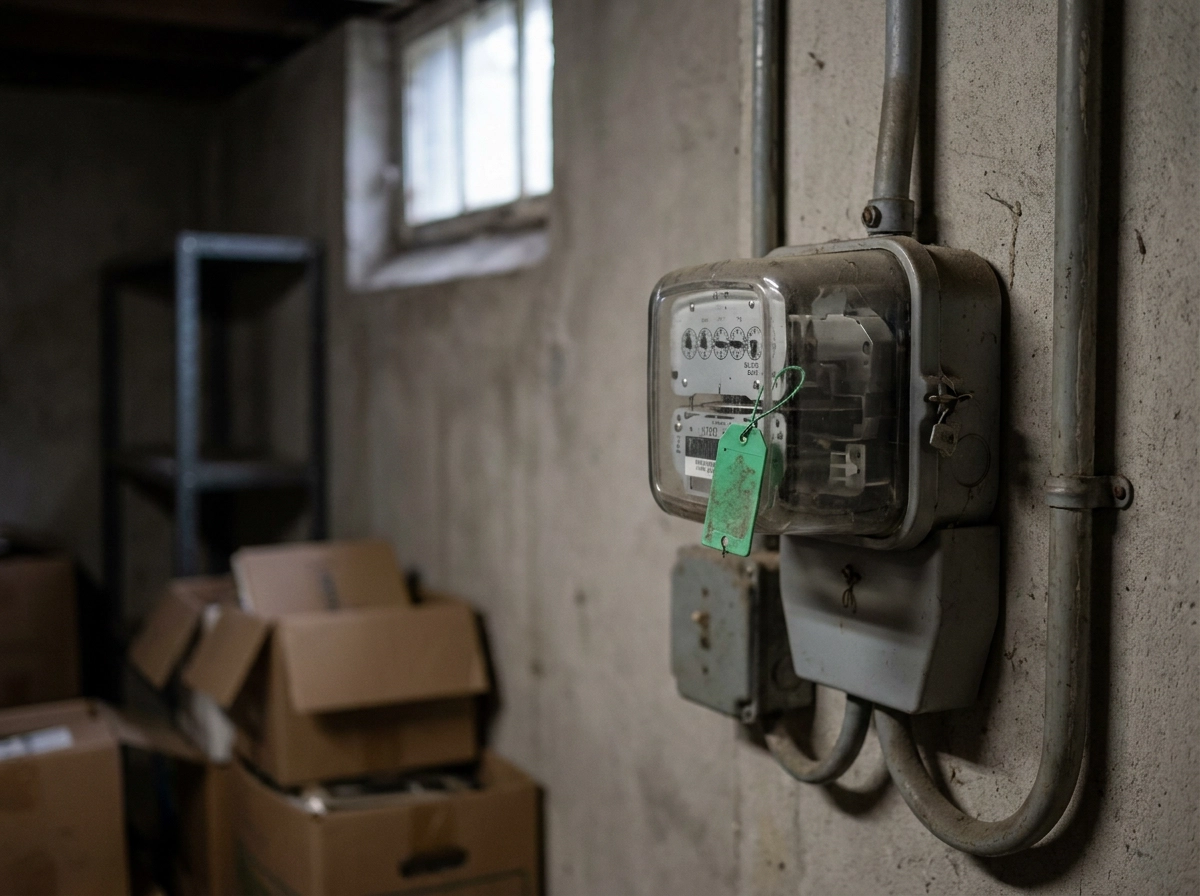
The problem has a name in energy policy: the split incentive. Because a tenant’s bill does not change regardless of how much electricity they consume, there is no financial signal pushing them to reduce usage. Meanwhile, the building owner has no practical reason to invest in tenant-level efficiency measures, since the savings would accrue to the tenant, not to them. Neither party has an incentive to act; consumption drifts upward; the owner absorbs the difference.
Cross-tenant subsidization is the direct financial consequence. A 24/7 restaurant or a server-dense data center can draw several times more power per square foot than a standard office suite, yet under master metering both pay the same rate. The low-consumption tenant effectively subsidizes the high-consumption one, with the building owner covering any gap that the flat-rate charges do not fully recover. Research confirms this pattern: approximately 20% of U.S. commercial tenants operate under electricity-included lease structures that expose them to zero marginal cost for consumption, removing any price-based motivation to reduce load.
For the building owner, those unrecovered costs are not a rounding error. They accumulate as a consistent drag on net operating income, compounding quietly across every tenant, every billing cycle, and every property in a multi-asset portfolio. The larger and more diverse the tenant mix, the wider the gap between what the owner pays and what flat-rate charges actually recover.
Sub-metering addresses this at the source. By making each tenant’s consumption individually visible, measurable, and attributable, it converts energy billing from an estimated allocation into actual usage-based billing. For a deeper look at how that shift translates into real savings across a property portfolio, this step-by-step guide to turning raw sensor data into measurable cost reductions in your buildings is worth reading alongside this piece.
What Sub-Metering Actually Does, and Why It Is Not an IT Project
Before a building owner approves the budget, one classification decision shapes everything that follows: is this an IT project or a financial one?
The answer is financial, and the distinction is not semantic.
Sub-metering’s primary function is legal and financial, not technical. It creates a defensible, meter-based record of individual tenant consumption that can be embedded directly into lease billing workflows. The sensors and wireless connectivity are the delivery mechanism. The actual output is an auditable number that tells you exactly how much electricity Tenant A consumed in April, timestamped and attributable by meter point.
From a revenue standpoint, sub-metering converts utility costs from a building operating expense into a recoverable line item charged to the tenant who generated it. That is precisely what a revenue instrument does. Understanding how smart meters function within an IoT platform to turn raw readings into billing-ready reports makes clear why the platform layer is as commercially significant as the sensor layer.
From a compliance standpoint, an expanding set of state and municipal benchmarking mandates now require building owners to report consumption data. The Institute for Market Transformation’s map of U.S. building benchmarking policies confirms mandatory programs at city, county, and state levels. Sub-metering infrastructure built for billing simultaneously satisfies these data collection requirements, making it a compliance investment as much as a financial one.
Practically, building energy metering at the tenant level replaces estimated or pro-rated charges with actual, timestamped figures. Pro-rated billing is commercially imprecise; where a tenant can present their own consumption data, estimated charges are difficult to defend.
The budget framing follows directly. A project justified as a technology upgrade competes in a discretionary capital pool alongside IT refreshes and software licenses. The same project framed as utility cost recovery with a documented payback period belongs in the asset management conversation, evaluated against NOI impact. Same hardware. Entirely different approval path.
The Metering Hierarchy: How a Sub-Metering System Is Structured
A deployable sub-metering system follows four distinct levels. At the top sits the utility master meter, owned and maintained by the energy supplier. Below that is the building-level meter, which records the owner’s total consumption and is the reference point for reconciling all tenant readings. The third level covers floor or zone meters, which track shared systems such as common-area lighting, elevators, and central HVAC. The fourth and financially critical level is the tenant sub-meter, the point at which consumption becomes individually attributable and billable.
IoT sensors enter the stack at levels three and four. The three device types most commonly deployed at these levels are clamp-on current transformers (CTs) that retrofit onto existing wiring without interrupting circuits, pulse-output meters that emit a signal for each unit of energy consumed, and Modbus-connected smart meters that transmit digital readings directly. Each device type feeds into a data aggregation layer sitting above the physical sensors.
Data flows upward from tenant meters through local gateways, which collect readings from multiple sensors and forward them to a central platform. At the platform layer, readings are normalized across device types, time-stamped, and mapped to individual tenant accounts. That aggregation path is precisely what converts raw sensor data into automated billing inputs.
The hierarchy also supports circuit-level granularity within a single tenant space. HVAC, lighting, and dedicated equipment circuits can each carry a separate sub-meter, producing both a billable consumption total and operational visibility into which loads are driving that total.
Designing the hierarchy before purchasing any hardware is the single most important planning decision. Every metering point must align with a defined lease boundary. If a meter sits ambiguously between two tenant spaces, or if a shared circuit is not clearly excluded from a tenant’s billable total, the resulting invoice is contestable. A defensible billing system depends entirely on a defensible measurement design.
IoT Sensor and Gateway Architecture for Commercial Deployments
Once the metering hierarchy is mapped to your lease boundaries, the next question is practical: what physical hardware populates that hierarchy, and how does data move from each meter point up to the billing platform?
The Sensor Layer
Three sensor types cover the majority of commercial deployments. Pulse-output electricity meters emit a digital signal for each unit of energy consumed; the pulse count is the consumption record. Modbus RS-485 smart meters deliver a direct digital readout over existing wiring at higher resolution with no signal-counting required. Clamp-on current transformers (CTs) clip around existing conductors and measure current flow without interrupting the circuit, making them the lowest-disruption retrofit option.
Connectivity Options
Each sensor needs a path to the gateway. The three practical options are:
- LoRaWAN: Long-range wireless that transmits across large buildings without dedicated cabling, handling concrete floors and metal partitions well.
- Modbus over existing wiring: Where an RS-485 backbone is already in place, a reliable, low-latency option that reuses installed infrastructure.
- Cellular NB-IoT: Suited to sites where neither a LoRaWAN gateway nor a wired backbone is practical, such as satellite buildings or parking structures.
Many deployments combine two methods across different zones depending on construction and existing cabling.
Gateways and Hardware Footprint
Gateways collect readings from multiple sensors and forward them to the cloud platform. In a typical multi-floor commercial building, one gateway can serve an entire floor or wing, keeping total hardware count modest relative to the billing revenue it enables.
Hardware-Agnostic Platform Design
Locking metering infrastructure to a single sensor manufacturer creates risk: discontinued product lines, pricing leverage, and limited upgrade paths. A hardware-agnostic platform accepts data from sensors made by different manufacturers, so coverage can expand as tenant mix changes without replacing existing equipment.
Sensor-Online’s platform supports a wide range of sensors, dataloggers, and connectivity tools, with native support for LoRaWAN, Modbus, MQTT, and Pulse integrations. Meters already installed can often be connected directly rather than replaced, cutting deployment cost and disruption. For a framework comparing platforms on these criteria, the IoT monitoring platform buyer’s checklist covers protocol support, deployment flexibility, and data ownership in concrete terms.
With sensor data flowing reliably into the platform, the next layer determines how raw readings become tenant invoices.
Platform Requirements: From Raw Readings to Tenant Invoices
Once the sensor data is flowing into your platform, the real work begins. Raw meter readings are numbers without context; the platform layer is what turns them into defensible, billable figures.
A capable usage-based billing platform for commercial sub-metering requires five core functions at minimum:
- Time-series data storage at adequate resolution, typically 15-minute intervals for electricity, to capture demand peaks and time-of-use tariff windows accurately
- Tenant-mapped meter configuration, so every reading is attributed to the correct lease account automatically
- Tariff and rate schedule management, allowing the platform to apply the right rate structure to each tenant’s consumption
- Automated report generation, producing billing-ready outputs without manual calculation
- Audit-trail logging, maintaining a tamper-evident record of every reading so disputed invoices can be resolved with evidence rather than guesswork
When evaluating IoT platform selection criteria, billing resolution and audit integrity consistently surface as the requirements that separate a monitoring tool from a financial instrument.
Tenant portals extend the value further without adding hardware. When occupants can see their own consumption in real time, behavior shifts. Sub-metering studies document a 12% to 20% kilowatt-hour reduction linked to that visibility, primarily from residential deployments where comparable behavioral dynamics apply. The portal costs nothing beyond a software configuration; the savings compound across every billing cycle.
API integration is where sub-metering becomes a financial system. Connecting the billing platform directly to your property management software or ERP means consumption data flows into invoices automatically, with no manual export or re-entry. That connection removes the administrative friction that causes property managers to delay billing or accept estimated figures. Understanding how platform trends are reshaping these integration workflows helps clarify why open API support is a non-negotiable selection criterion.
Finally, alarm management within the platform serves an operational purpose beyond billing. An unexpected consumption spike at the tenant level can indicate a failing HVAC unit, an unauthorized server room, or a lease violation. Catching it through an automated alert gives the property manager time to act before the next utility bill arrives and the cost has already been absorbed.
Compliance and Benchmarking: The Regulatory Layer
Benchmarking mandates are not hypothetical future risk, they are active obligations in dozens of jurisdictions today. Chicago’s Energy Benchmarking Ordinance is one well-known example; ENERGY STAR Portfolio Manager, which tracks consumption across nearly 25% of U.S. commercial buildings, serves as the primary reporting vehicle for dozens of similar programs nationwide. Sub-metering infrastructure already deployed for billing purposes satisfies these data collection requirements simultaneously, at no additional instrumentation cost.
The granularity requirement is where master-meter-only buildings face a structural compliance gap. Benchmarking programs increasingly want consumption disaggregated by occupant type, floor, or use category, not just a building-wide total. A master meter cannot produce that breakdown. Tenant-level energy metering and monitoring can, and the same meter hierarchy used to generate invoices becomes the source of record for regulatory submissions.
The regulatory landscape is not uniform, and this matters before you deploy. Some jurisdictions actively encourage or require sub-metering as part of green building policy. Others impose restrictions on how building owners can bill tenants for sub-metered consumption, treating it more like a utility service subject to rate oversight. Deploying first and researching jurisdiction-specific rules afterward creates real legal exposure. The applicable state utility commission rules and local ordinances should be confirmed before tenant billing goes live. This same pre-deployment review is equally relevant in infrastructure contexts: IoT-based implementations built around regulatory compliance requirements consistently demonstrate that understanding the legal framework before specifying the technical architecture avoids costly redesigns.
Sub-metering records also create a defensible compliance history. Time-stamped, meter-attributed readings can be submitted directly to benchmarking programs, shared with auditors, or incorporated into sustainability and ESG reporting with full traceability to the source measurement.
Because regulatory requirements will tighten over time, the practical approach is to instrument at higher resolution and greater coverage than current mandates strictly require. Retrofitting additional metering points later costs significantly more than including them in the initial deployment. Build for where the regulations are heading, not only where they stand today.
Lease Contracts and Sub-Metering: What Property Owners Need to Know
Regulatory compliance sets the stage, but the contracts sitting in your lease files determine whether sub-metered billing is legally enforceable from day one.
Existing leases need explicit contractual authorization before you can switch billing methods. If a current lease specifies fixed utility charges or a square-footage allocation, that language governs until it is replaced. Switching to actual consumption billing mid-lease without tenant consent exposes you to disputes and potential legal liability. In most jurisdictions, the change must wait for lease renewal or require a signed addendum that both parties agree to. Attempting to impose the new billing method unilaterally is the most common and most avoidable mistake property owners make when rolling out sub-metering.
When drafting a sub-metering addendum, five clauses carry the most legal weight:
- Meter point definition: Identify exactly which meter corresponds to which tenant space, tied to the lease boundary.
- Rate methodology: State whether billing applies the utility’s pass-through rate or a calculated tariff, and whether administrative fees apply.
- Billing cycle and delivery: Specify when readings are taken, when invoices are issued, and how they are delivered.
- Audit rights: Grant the tenant the right to request meter readings, supporting calculations, and test results.
- Dispute resolution: Define the process if a tenant contests a reading, including timelines and escalation steps.
New leases are the cleaner path. Building sub-metering provisions into an agreement before it is signed eliminates retrofitting ambiguity entirely and ensures tenants enter the arrangement with full understanding of how utility costs are calculated.
Jurisdiction matters more than most owners expect. Roughly 22 states plus Washington, D.C., have specific statutes or regulations governing sub-metering. Some require utility commission approval before a landlord can bill on actual consumption; others treat it as a straightforward cost pass-through under landlord-tenant law. Legal review of the applicable state and local rules is a required step before billing goes live.
Finally, treat your meter data as a legal asset. A platform that maintains a continuous, tamper-evident log of every reading gives you the documented evidence needed to defend any billing figure a tenant disputes.
What Does Deployment Actually Cost, and What Do You Recover?
Once the legal framework is in place, the natural next question is whether the numbers actually work. They do, and the evidence is concrete.
The most cited outcome in commercial sub-metering comes from the Bank of America Building in San Francisco. After installing 120 tenant sub-meters, the building recovered approximately $1 million in previously absorbed energy costs within the first year. The driver was straightforward: actual tenant consumption exceeded the square-footage-based estimates that had been used for billing by 300%. High-intensity tenants had been systematically undercharged, and the gap was coming directly out of the building owner’s net operating income.
Cost recovery is only half the financial picture. Sub-metering studies document 12% to 20% kilowatt-hour reductions when tenants gain direct visibility into their own consumption, primarily from residential deployments where comparable behavioral dynamics apply. That means the building’s total utility bill can shrink even as the owner recovers a larger share of it.
Deployment cost depends on three variables:
- Number of metered points. Tenant count and circuit granularity determine how many meters are needed. A 20-tenant building billed at the suite level requires far fewer points than one metered circuit by circuit.
- Connectivity method. Wireless LoRaWAN deployments require significantly less installation labor than running new wiring through finished commercial space, which reduces both cost and disruption.
- Retrofit vs. replacement. Where existing meters support pulse output or Modbus communication, they can feed directly into the platform without being replaced, cutting hardware spend considerably.
For a multi-tenant office building with meaningful variation in energy intensity across tenants, the payback timeline can be short. If sub-metering reveals that high-consumption tenants have been subsidized by lower-consumption neighbors, the revenue recovery effect alone can offset hardware and platform costs within one or two lease billing cycles.
Working with a full-stack partner like Sensor-Online simplifies the path considerably. Because the sensor hardware, connectivity layer, and billing-capable platform come from a single source, there is no coordination overhead between separate hardware, network, and software vendors. The procurement is cleaner, the integration is faster, and the route from first meter reading to first accurate tenant invoice is a straight line.
Getting Started with Sensor-Online
If the financial case from the previous section has you thinking about next steps, the practical question is straightforward: what does a deployable configuration actually look like for your building?
Sensor-Online’s platform covers the full stack in a single environment. Sensor onboarding, multi-protocol data ingestion (LoRaWAN, Modbus, MQTT, and Pulse), time-series consumption metering, tenant-level billing reports, alarm management, and API integration with external property management or accounting systems are all accessible through one dashboard. There is no need to coordinate between a hardware vendor, a connectivity provider, and a separate software platform.
Where existing meters are already installed, the platform connects to them directly as described above, preserving hardware investment. With a broad catalog of supported devices, including IoT-based wireless sensors for indoor environment monitoring, coverage gaps can be filled without ripping out functioning equipment. That reduces both upfront cost and installation disruption.
The right starting point is a metering audit. This means mapping existing meter points against lease boundaries, identifying which tenant spaces currently lack individual coverage, and confirming which connectivity method suits the building’s construction. Sensor-Online’s team handles this assessment as part of the deployment process, so you are not expected to resolve those technical questions on your own before engaging.
For property owners with data residency requirements or IT governance policies that restrict third-party cloud platforms, both on-premise and cloud deployment options are available. The architecture fits your constraints, not the other way around.
To find out what a sub-metering configuration looks like for your specific building, reach out directly. Contact the Sensor-Online team at info@nodeledge.se or call +46 (0)500 6000 22. The team is always happy to walk through the technical details and identify the fastest path to accurate, defensible tenant-level billing.
Key Takeaways for Property Owners Considering Sub-Metering
If there is one principle that should guide every decision in a sub-metering project, it is this: the technology serves the business purpose, not the other way around. Sub-metering is a revenue recovery and compliance instrument. The sensors, gateways, and platform are the means; defensible tenant billing and regulatory alignment are the end.
With that framing in place, here are the five commitments that determine whether a deployment succeeds or stalls:
- Design the hierarchy before buying hardware. Meter points must map directly to lease boundaries. A metering layout that does not match the legal demised premises creates billing disputes that no software can resolve. Precision at the design layer is what makes accuracy at the billing layer possible.
- Platform selection is as consequential as sensor selection. A usage-based billing platform that connects to your property management system converts raw consumption readings into tenant invoices automatically. Without that integration, sub-metering produces data rather than revenue.
- Confirm jurisdiction-specific rules before billing goes live, requirements vary from straightforward cost pass-through to utility commission approval.
- The financial case is well-established, but architecture-dependent. Documented outcomes, including significant recovery of previously absorbed energy costs in the first year after installing tenant sub-meters, result from deploying the right metering hierarchy against the right lease structure. The architecture produces the result.
- Start with a metering audit, not a hardware order. Mapping existing meter points, identifying coverage gaps, and confirming connectivity options for the building’s construction is the correct first step. Everything after that follows from it.
Frequently Asked Questions
What is the main difference between master metering and sub-metering?
Master metering uses a single utility meter for an entire building, with costs recovered through fixed fees tied to square footage. This creates a split incentive problem where tenants have no motivation to reduce energy consumption, and high-usage tenants effectively subsidize low-usage ones. Sub-metering measures individual tenant consumption separately, enabling actual usage-based billing that aligns incentives for both property owners and tenants.
Is sub-metering primarily an IT project or a financial one?
Sub-metering is fundamentally a financial and legal project, not an IT upgrade. While it uses sensors and wireless connectivity, the primary function is creating a defensible, meter-based record of individual tenant consumption that can be embedded directly into lease billing workflows. This distinction is important for budget approval, as it should be evaluated as a utility cost recovery investment with documented payback periods, not as a discretionary technology upgrade.
What are the four levels of a sub-metering system hierarchy?
The four levels are: (1) The utility master meter owned by the energy supplier, (2) The building-level meter recording total consumption, (3) Floor or zone meters tracking shared systems like lighting, elevators, and HVAC, and (4) Tenant sub-meters that make consumption individually attributable and billable. The hierarchy must be designed before purchasing hardware, with every metering point aligned to defined lease boundaries.
How much can property owners expect to recover through sub-metering, and is there a typical payback period?
The Bank of America Building in San Francisco recovered approximately $1 million in previously absorbed energy costs within the first year after installing 120 tenant sub-meters, with actual consumption exceeding square-footage-based estimates by 300%. Additionally, sub-metering typically triggers 12% to 20% kilowatt-hour reductions when tenants gain visibility into their consumption. For multi-tenant office buildings with energy-intensity variation, payback can occur within one or two lease billing cycles when combined with revenue recovery effects.
What legal steps must property owners take before implementing sub-metering on existing leases?
Existing leases need explicit contractual authorization before switching billing methods. If a lease specifies fixed utility charges or square-footage allocation, that language governs until renewed. Property owners must either wait for lease renewal, obtain a signed addendum from both parties, or risk legal liability. Key clauses in a sub-metering addendum should include meter point definition, rate methodology, billing cycle details, tenant audit rights, and dispute resolution processes. Additionally, jurisdiction-specific rules must be confirmed beforehand, as roughly 22 states plus Washington, D.C., have specific regulations governing sub-metering.
